
Sub-Total: $0
Clinton County Historical Society Collections
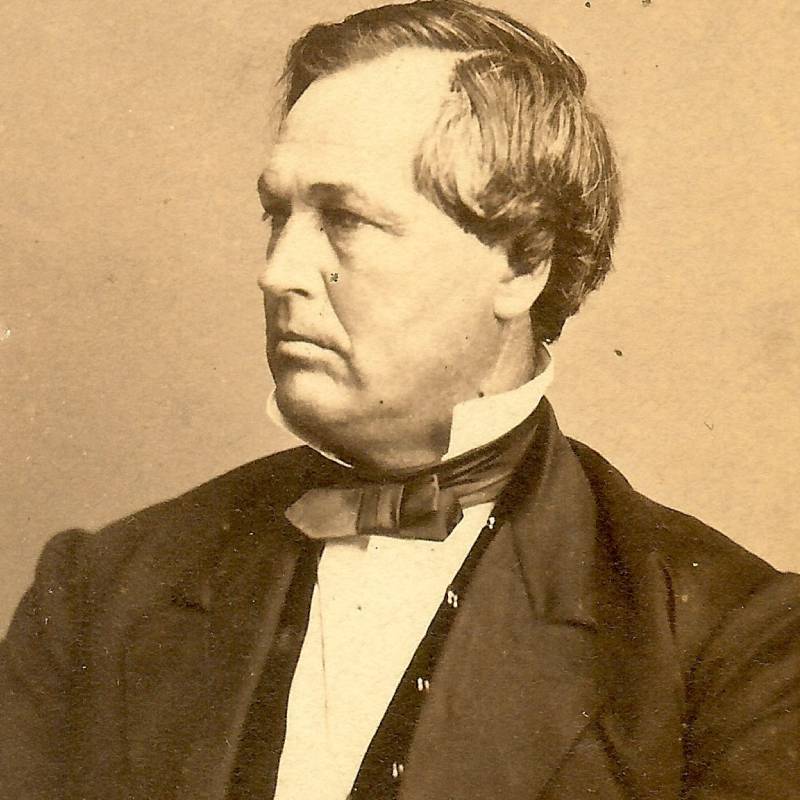
General James W. Denver Collection
General James W. Denver (1817–1892) was a Civil War general, territorial governor, and potential presidential candidate who personified the era of “manifest destiny.” The Clinton County History Center preserves a dedicated room featuring Denver’s personal library and artifacts from his military and governmental career.
Born near Winchester, Virginia, Denver moved with his family to a farm near Wilmington in 1831. After earning a law degree from Cincinnati Law School, he established a law practice in Platte City, Missouri. He recruited a volunteer infantry during the Mexican-American War and served under General Winfield Scott. Denver later led a party overland to California during the Forty-Niner gold rush, served in the California State Senate, was appointed California Secretary of State, and elected to Congress in 1855. That same year, he married Catherine Rombach of Wilmington, where the couple made their home.
Denver’s national political career included serving as Commissioner of Indian Affairs, Governor of the Kansas Territory during the turbulent “Bleeding Kansas” era, and brigadier general of all federal troops in Kansas during the Civil War. Later, he organized a Washington, D.C., law firm representing Native Americans in treaty disputes against the U.S. government.
Denver is buried in the family plot at Sugar Grove Cemetery in Wilmington. His Wilmington home, Rombach Place, where he and Catherine raised their family, still stands and has served as the museum of the Clinton County Historical Society since 1955.
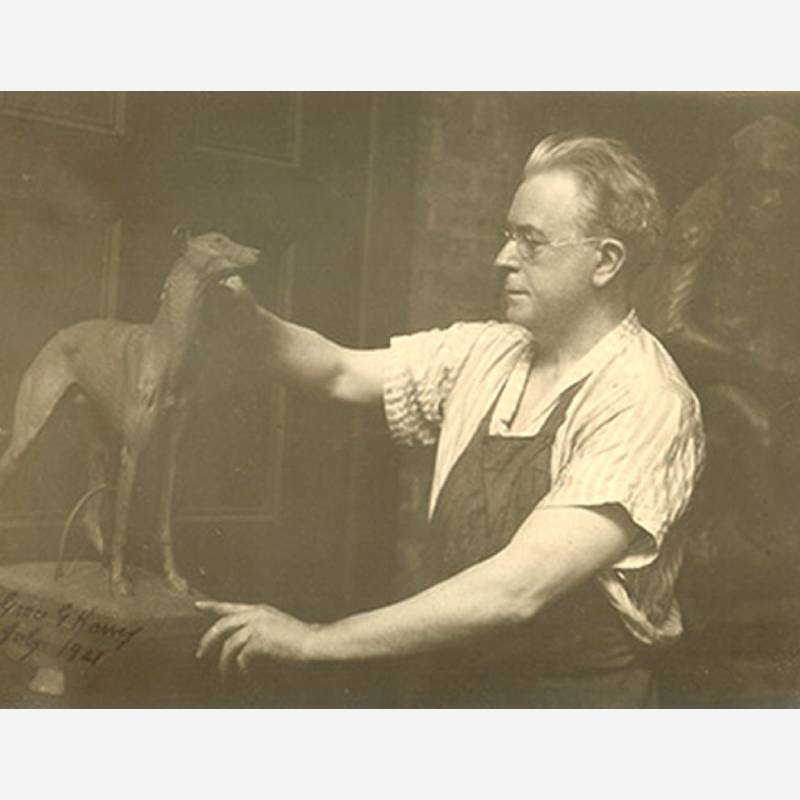
Eli Harvey, Artist and Sculptor
Collections Highlights
Eli Harvey (1860–1957), internationally recognized for his animal sculptures and paintings, was born near Springfield Friends Meeting in Clinton County. He passed away in Alhambra, California, and his ashes rest at Springfield Friends Cemetery.
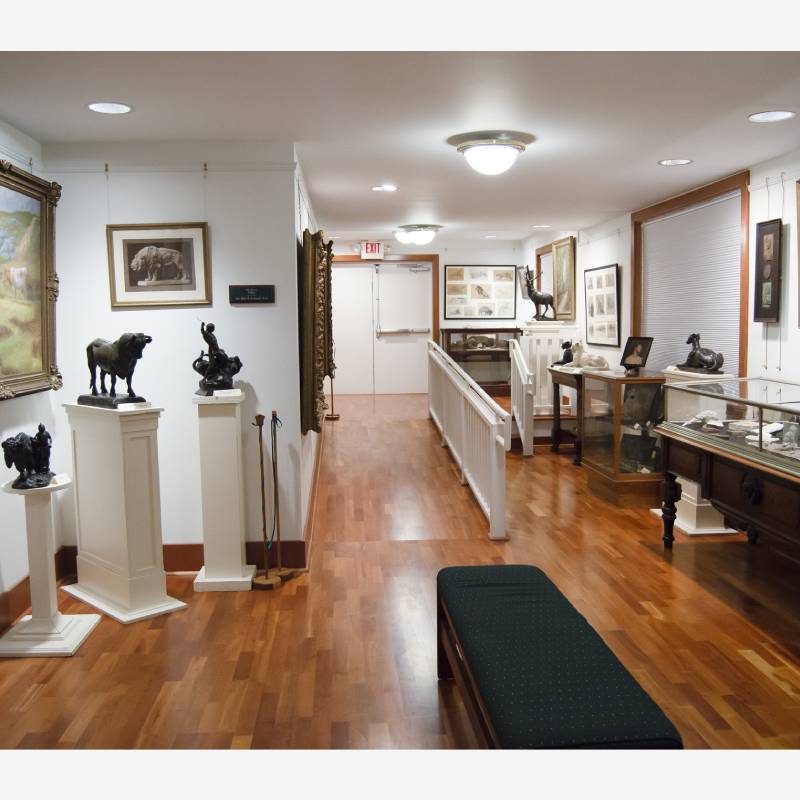
Harvey specialized in animal sculpture, and his works include the Brown University mascot “Brown Bear,” the J.C. Penney bull, and decorations for the lion house at the New York Zoological Park. Many of his paintings and bronzes were donated to the History Center by Harvey himself. Featured in the gallery at Rombach Place is a bronze copy of a bull elk, commissioned in 1904 for the Order of Elks.
Carl Moon, Photographer of the Southwest
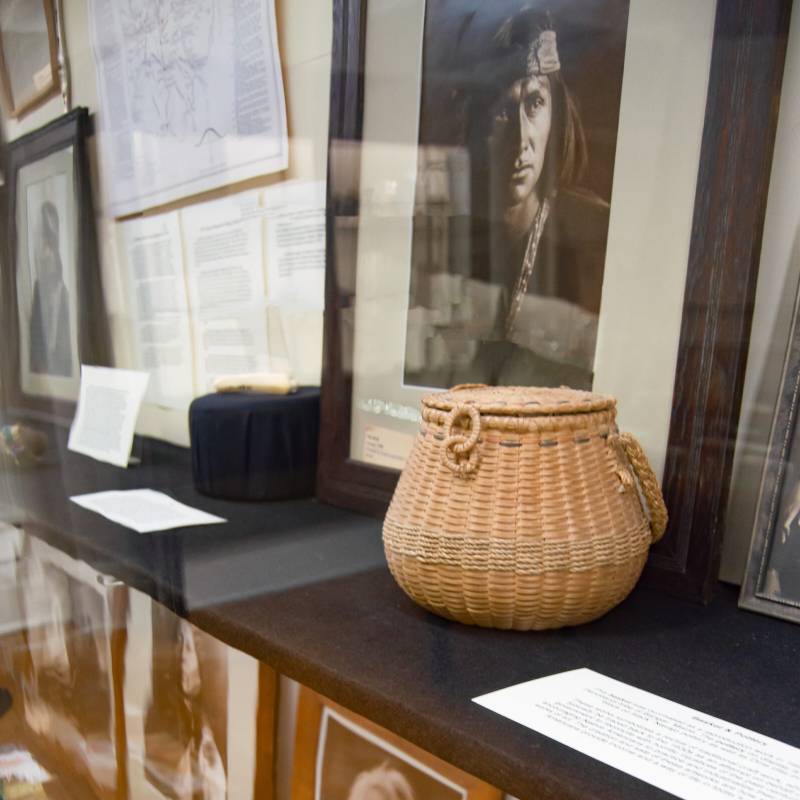
Carl Moon, originally from Wilmington, was one of the first photographers to document Native American life in the Southwest during the early 1900s. Drawn by his deep interest in Indian culture and a desire to preserve a vanishing way of life, Moon photographed tribes in Arizona, New Mexico, and Oklahoma. His wife, Grace Purdie Moon, once said, “Mr. Moon and I like to write about Indians and picture them because we almost wish we were Indians ourselves.”
His photographs are featured in the Native American Heritage Exhibit at Rombach Place, alongside other artifacts highlighting indigenous culture.
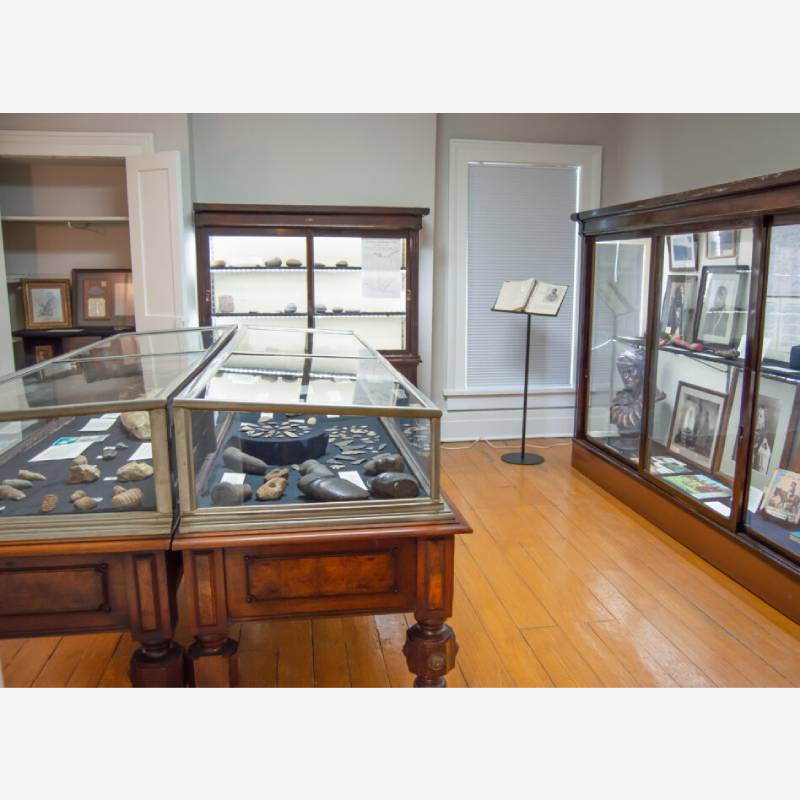
Native American Heritage Exhibit
This exhibit showcases arrowheads, projectile points, and prehistoric items found in Clinton County. Highlights include a reproduction of the historic Wilmington Tablet, photographs by Carl Moon, prehistoric fossils and archaeological records by Dr. George Austin, and a +10,000-year-old woolly mammoth tusk donated by the family of Lucile Fisher Hadley.
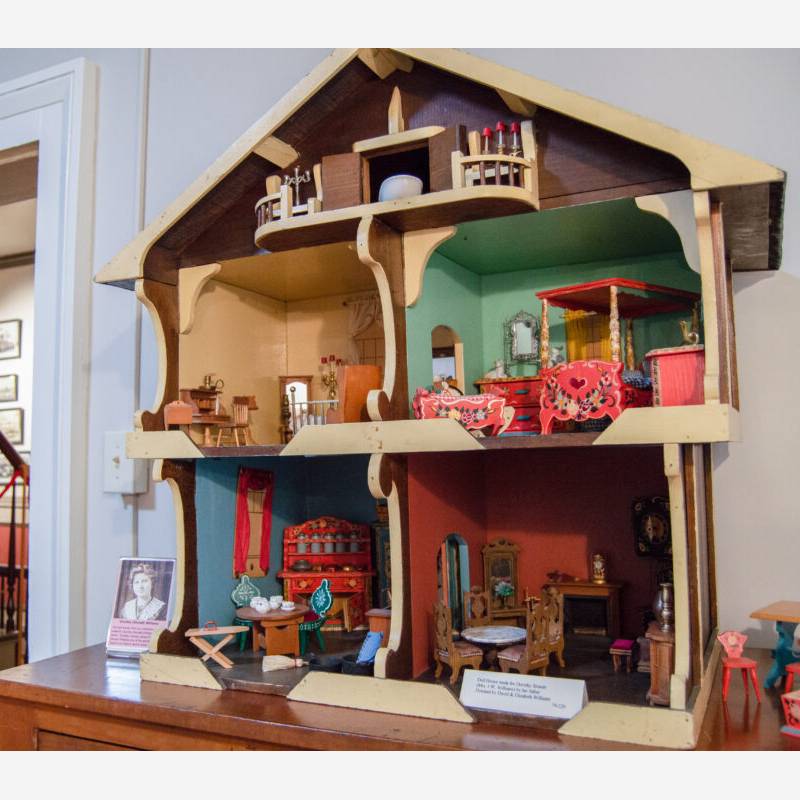
The Toy Room
The Toy Room captures play from the mid-1800s to the early 20th century. On display are dolls, carriages, play dishes, carpentry boxes, scooters, marbles, and more, crafted from porcelain, glass, wood, tin, and cast iron. Some toys also served memorial purposes, honoring lost loved ones.
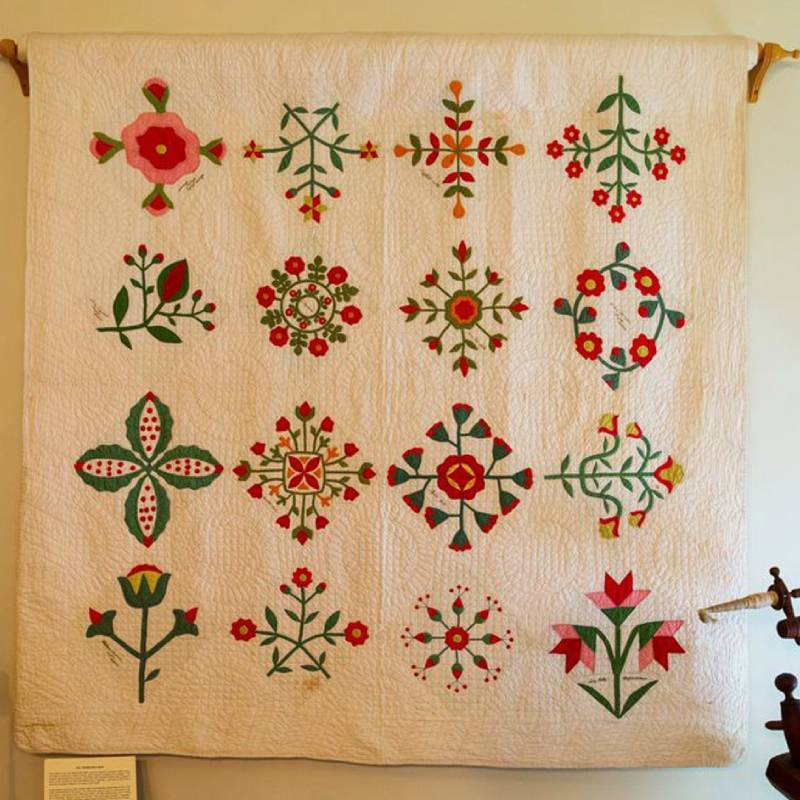
The Textile Room
The Textile Room features Quaker quilts and coverlets, reflecting the early influence of the Society of Friends in Clinton County. Notable pieces include an 1842 abolitionist quilt signed by its makers, likely created to strengthen bonds between divided Quaker meetings during the 1843 abolitionist separation. Wilmington College, originally founded by Quakers in 1870, also reflects this heritage.
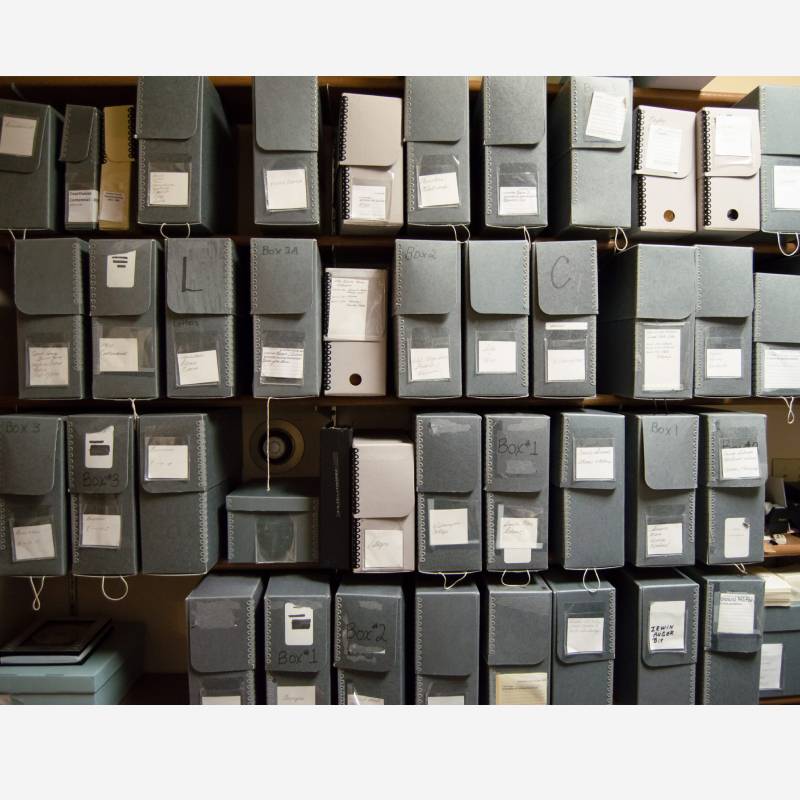
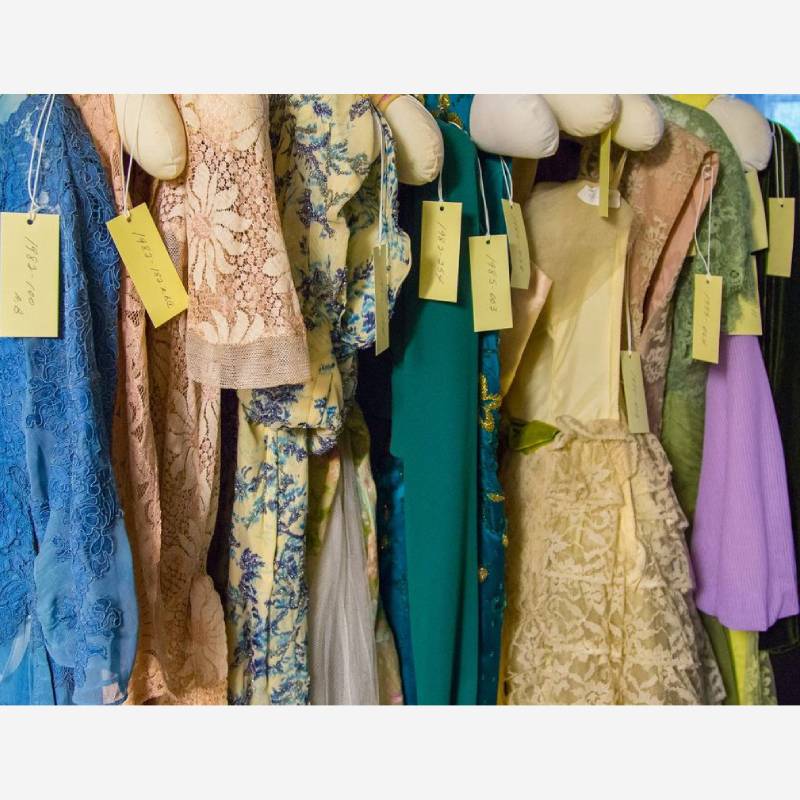
Artifacts, Clothing, Furnishings, and Photographs
The Society maintains an extensive textile collection (not on public display) and periodically features different eras of fashion. The photography repository includes historical images from the early 1800s to the present. Many are featured weekly in the “Throwback Thursday” partnership with the Wilmington News Journal.
Reproductions of photographs are available in-house (4×6 or 5×7) or on a USB flash drive for larger images. A minimum donation of $10 per image supports archival preservation supplies and materials.